More insights for athletes
Explore additional training strategies and performance techniques

December 16, 2025
Learn how proper strength and mobility training prevents common sports injuries. Discover the injury prevention strategies that have helped hundreds of athletes stay healthy and compete at their highest level.
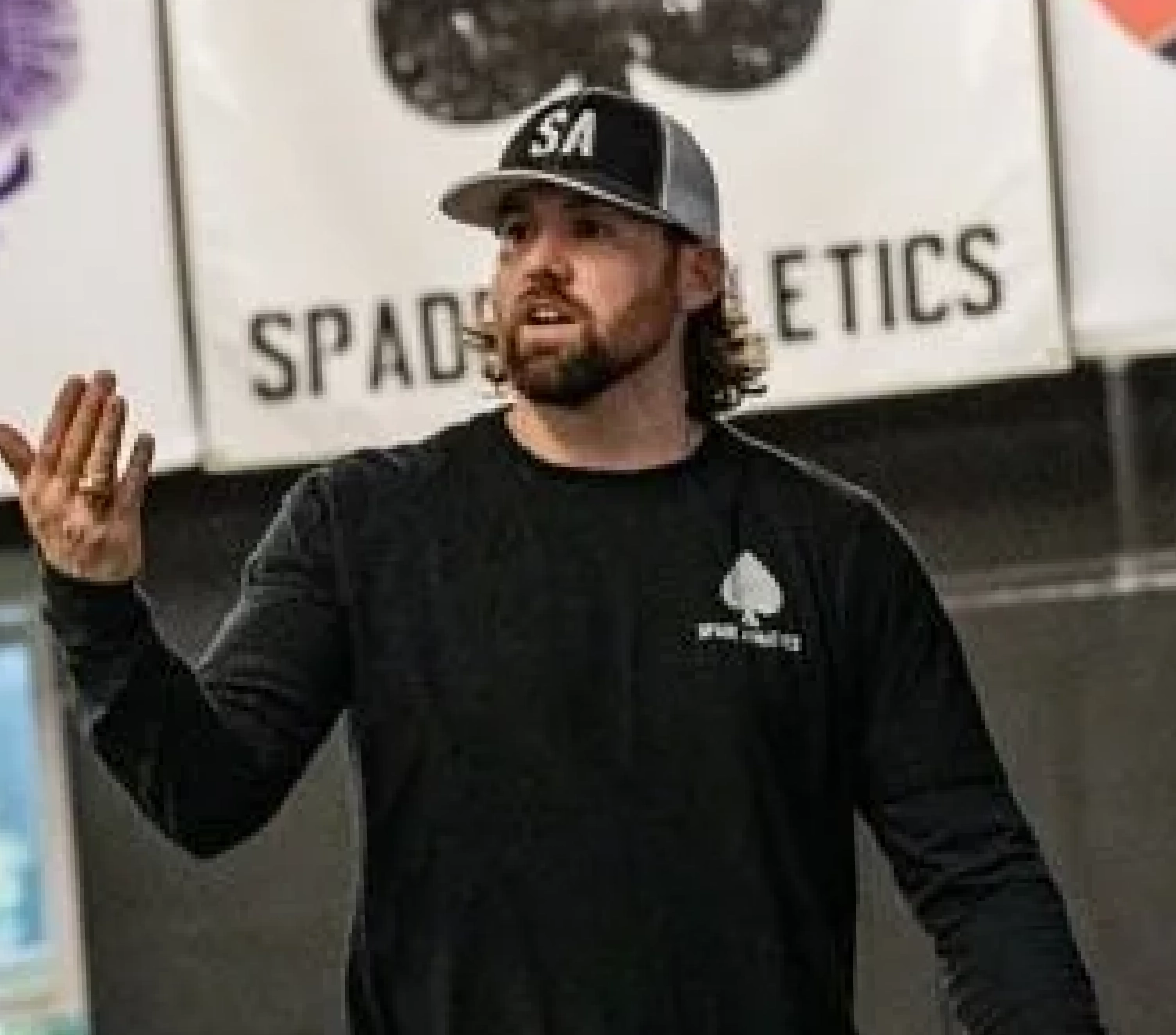
The call comes in every September. A parent reaches out, frantic because their kid just went down with a hamstring pull three games into the season. Or it's a torn ACL that's going to cost them their junior year. Or it's a nagging shoulder issue that's been getting progressively worse because nobody addressed it when it was still manageable. Here's what I tell every one of those parents: we can fix this, but we should have prevented it six months ago.
At Spade Athletics, we've worked with hundreds of athletes over the years. We've sent over 100 to college sports and coached multiple state champions. But here's what I'm most proud of: the number of athletes who made it through entire seasons healthy because we built their bodies to handle the demands of their sport before those demands broke them down. Injury prevention isn't sexy. It doesn't get highlight reels. But it's the difference between playing four years of high school sports and watching from the sidelines.
Walk into any high school athletic training room in October and you'll see the same pattern. Hamstring strains. Ankle sprains. Knee pain that won't go away. Shoulder issues from overhead throwing. Lower back pain in linemen. These aren't random accidents. They're predictable breakdowns that happen when you ask an unprepared body to perform at a high level.
Most young athletes have never done legitimate strength training. They've done some push-ups and sit-ups in PE class. Maybe their coach had them do some bodyweight circuits. But they've never systematically built the structural integrity their bodies need to handle the forces of competitive sports. Then they show up to tryouts or preseason practice and immediately start sprinting, cutting, jumping, and colliding at full speed. Their bodies aren't ready for it.
The reality is this: if your muscles, tendons, and connective tissue aren't strong enough to handle deceleration forces, absorb impact, and stabilize your joints under load, you're going to get hurt. It's not if. It's when. This is why we've built our athletic performance training programs around one core principle: prepare the body for what the sport demands before the sport demands it.
After years of coaching athletes and watching what works, I can tell you that injury prevention comes down to three interconnected systems. Get these right and you dramatically reduce injury risk. Ignore them and you're rolling the dice every time you step on the field.
First: Foundational Strength Through Full Range of Motion
Most athletes think they're strong because they can do a few reps of an exercise. But strength through a limited range of motion isn't real strength. It's a liability. If you can squat 225 pounds but your hips are so tight you can barely get to parallel, you're not strong. You're injury-prone. Real strength means you can control your body through the entire range of motion that your sport demands.
This is why our strength training programs start with mobility work and movement quality before we ever touch heavy weight. We teach athletes how to squat properly, how to hinge at the hips, how to stabilize their spine under load. We build strength in positions that matter for their sport. A football lineman needs hip strength in a wide stance. A basketball player needs single-leg stability for landing. A baseball pitcher needs scapular control through the entire throwing motion.
When you build strength through full ranges of motion, you create resilience. Your joints can handle forces from multiple angles. Your muscles can absorb impact without straining. Your body becomes more durable because it's prepared for the unexpected positions that happen in competition.
Second: Reactive Strength and Deceleration Control
Here's where most training programs completely miss the mark. They teach athletes how to produce force, but they never teach them how to absorb it. Every time you sprint and then plant to cut, every time you jump and land, every time you swing a bat or throw a ball, you're creating forces that your body has to decelerate and control. If you can't handle those forces, your muscles, tendons, and ligaments take damage.
This is why plyometric training and deceleration drills are non-negotiable in our programs. We teach athletes how to land properly. How to decelerate without putting excessive stress on their knees. How to change direction without their ankles collapsing inward. These aren't just performance drills. They're injury prevention fundamentals that protect athletes when fatigue sets in and technique starts to break down.
We've worked with dozens of athletes who came back from ACL injuries stronger than they were before. Not because the surgery made them better, but because we finally taught them how to control deceleration forces that they'd been mismanaging their entire athletic career. The athletes who train these patterns before they get injured? They never tear their ACL in the first place.
Third: Sport-Specific Mobility and Recovery Protocols
Every sport creates specific movement patterns and demands. Football linemen need mobile hips and strong glutes to stay low in their stance. Baseball pitchers need shoulder mobility and thoracic spine rotation to throw without compensation. Soccer players need ankle mobility and hip stability to cut and change direction. If you don't maintain the mobility your sport requires, your body will find a way to move by compensating, and that compensation creates injury.
This is why cookie-cutter programs fail. A general "sports performance" program that treats every athlete the same isn't injury prevention. It's a recipe for breakdown. At Spade Athletics, every athlete goes through an assessment where we identify their specific movement limitations and build mobility work directly into their training program. We don't wait until they're hurt to address these issues. We handle them proactively.
Recovery protocols matter just as much as the training itself. If you're doing two-a-days or playing multiple sports back-to-back with no recovery strategy, your body never gets a chance to adapt. Tissue breaks down faster than it repairs. Inflammation builds up. Small issues become big problems. This is why we teach our athletes about sleep, nutrition, hydration, and strategic rest days. Recovery isn't optional. It's part of the training program.
I could give you theory all day, but what matters is whether this actually works. Let me tell you about a few athletes we've worked with who stayed healthy when everyone around them was getting injured.
The linebacker who played four years without missing a game: He came to us as a freshman with tight hips, weak glutes, and zero foundational strength. We spent his entire freshman year building movement quality and teaching him how to decelerate properly. By his sophomore year, he was one of the strongest kids on his team. By his junior year, he was starting varsity. By his senior year, he'd played four full seasons without a single injury that kept him out of a game. Not because he was lucky. Because his body was prepared for what football demanded.
The basketball player who recovered from a stress fracture stronger than before: She came to us after sitting out half her sophomore season with a stress fracture in her foot. The injury happened because she'd ramped up training volume too fast without building the foundational strength to support it. We rebuilt her from the ground up, focusing on single-leg strength, landing mechanics, and progressive loading. She played her entire junior and senior seasons healthy, earned a college scholarship, and never had another stress fracture. The injury that could have derailed her career became the wake-up call that made her train smarter.
The baseball pitcher who added velocity without shoulder pain: This is a pattern I see constantly. Young pitchers trying to throw harder without building the shoulder stability and mobility to support it. They add velocity, but they also add pain. We worked with a pitcher who'd been dealing with shoulder discomfort for two years. Within three months of addressing his scapular control, improving his thoracic mobility, and building rotational strength through his core, his shoulder pain disappeared and his velocity increased. He didn't throw harder by forcing it. He threw harder because his body could finally move the way it was supposed to.
These aren't miracle stories. They're the predictable outcome of proper training. When you build strength, teach deceleration control, maintain mobility, and respect recovery, athletes stay healthy. It's not complicated. It's just consistent.
Here's the conversation I have with parents at least once a week: their kid is playing travel ball or club soccer or AAU basketball year-round with no off-season, and they're wondering why their kid keeps getting hurt. The answer is simple. You can't perform at a high level indefinitely without building in dedicated training blocks that prepare your body for that performance.
Youth sports have become a grind culture where kids are expected to specialize early and play their sport 12 months a year. But playing your sport isn't the same as training for your sport. When you play, you're expressing the abilities you've built. When you train, you're building the abilities that let you play without breaking down. If you never take time away from competition to focus on strength, mobility, and movement quality, you're setting your kid up for injury.
The best thing you can do for a young athlete is give them an actual off-season where they focus on getting stronger, more mobile, and more resilient. That doesn't mean sitting on the couch. It means dedicating 8 to 12 weeks to building their body instead of just beating it up. The athletes who do this come back to their sport faster, stronger, and healthier than the kids who played through the summer and showed up to preseason already broken down.
Injury prevention isn't about bubble-wrapping your kid or avoiding contact. It's about preparing their body to handle the demands of their sport before those demands exceed what their body can manage. It's about building strength through full ranges of motion, teaching deceleration control, maintaining sport-specific mobility, and respecting recovery as part of the training process.
At Spade Athletics, we've seen this work hundreds of times. Athletes who train properly stay healthy. Athletes who stay healthy get more playing time. Athletes who get more playing time develop faster and compete at higher levels. It's not magic. It's just smart training that prioritizes long-term health alongside short-term performance.
Your kid's body is their most important piece of equipment. Treat it that way.
Explore additional training strategies and performance techniques

Take the first step towards unlocking your full athletic potential with a FREE performance assessment.