More insights for athletes
Explore additional training strategies and performance techniques

December 16, 2025
Discover the proven process that transforms overlooked athletes into explosive performers. Learn how individualized coaching unlocks athletic potential that generic programs miss.
An eighth-grader walked into Spade Athletics a few years ago. Small kid. Slow kid. At least that's what every other coach had told him. His travel team coach said he didn't have the speed for competitive soccer. His PE teacher suggested he focus on sports that didn't require athleticism. Even his own parents were starting to wonder if maybe their kid just wasn't built for sports.
I watched him move for about ten minutes and saw something completely different. This kid wasn't slow. He was untrained. His movement patterns were inefficient. His strength foundation was nonexistent. His mechanics were terrible. But underneath all of that? Raw potential that nobody else had bothered to develop. Six months later, he was starting on his high school varsity team. A year after that, club coaches who'd cut him were calling his parents asking him to come back. He wasn't a different kid. He just finally had someone who saw what was possible and built a program to get him there.
That's what we do at Spade Athletics. We take athletes that other facilities overlook or give up on, and we unlock the potential that's been there the entire time. Not through magic. Through systematic, intelligent training that addresses what's actually holding them back.
Here's what happens at most youth sports tryouts and evaluations: coaches run a few drills, time a 40-yard dash, maybe test vertical jump, and make snap judgments about who's athletic and who's not. Kid runs a slow 40? Not athletic. Kid looks uncoordinated in agility drills? Not athletic. Kid can't jump high? Not athletic.
The problem with this approach is it confuses trained ability with natural potential. Most young athletes have never done legitimate athletic performance training. They've never been taught proper sprint mechanics. They've never built foundational strength through Olympic lifts and explosive exercises. They've never worked on the mobility and stability that allow efficient movement. So when you test them, you're not measuring their potential. You're measuring their current lack of training.
Think about it this way: if you took two kids with identical genetics, trained one of them properly for six months and left the other one completely untrained, their 40 times would be drastically different. The trained athlete would look naturally faster. The untrained athlete would look naturally slow. But it's not nature. It's training. Or lack of it.
This is why we've built our entire system around one core principle: every athlete has more potential than they're currently expressing. Our job is to figure out what's preventing them from accessing that potential and systematically remove those barriers through targeted training.
After working with hundreds of athletes over the years, I can tell you that lack of potential is rarely the problem. The problem is one or more of these three barriers that prevent athletes from expressing the potential they already have.
Barrier 1: Movement Inefficiency
Watch a highly trained athlete sprint and then watch an untrained athlete sprint. The difference is dramatic. The trained athlete has perfect posture, powerful arm drive, optimal foot strike patterns, and efficient force application. The untrained athlete is fighting themselves the entire way: poor posture that creates energy leaks, weak arm drive that doesn't contribute to forward momentum, foot strike patterns that brake with every step, and force application that goes everywhere except forward.
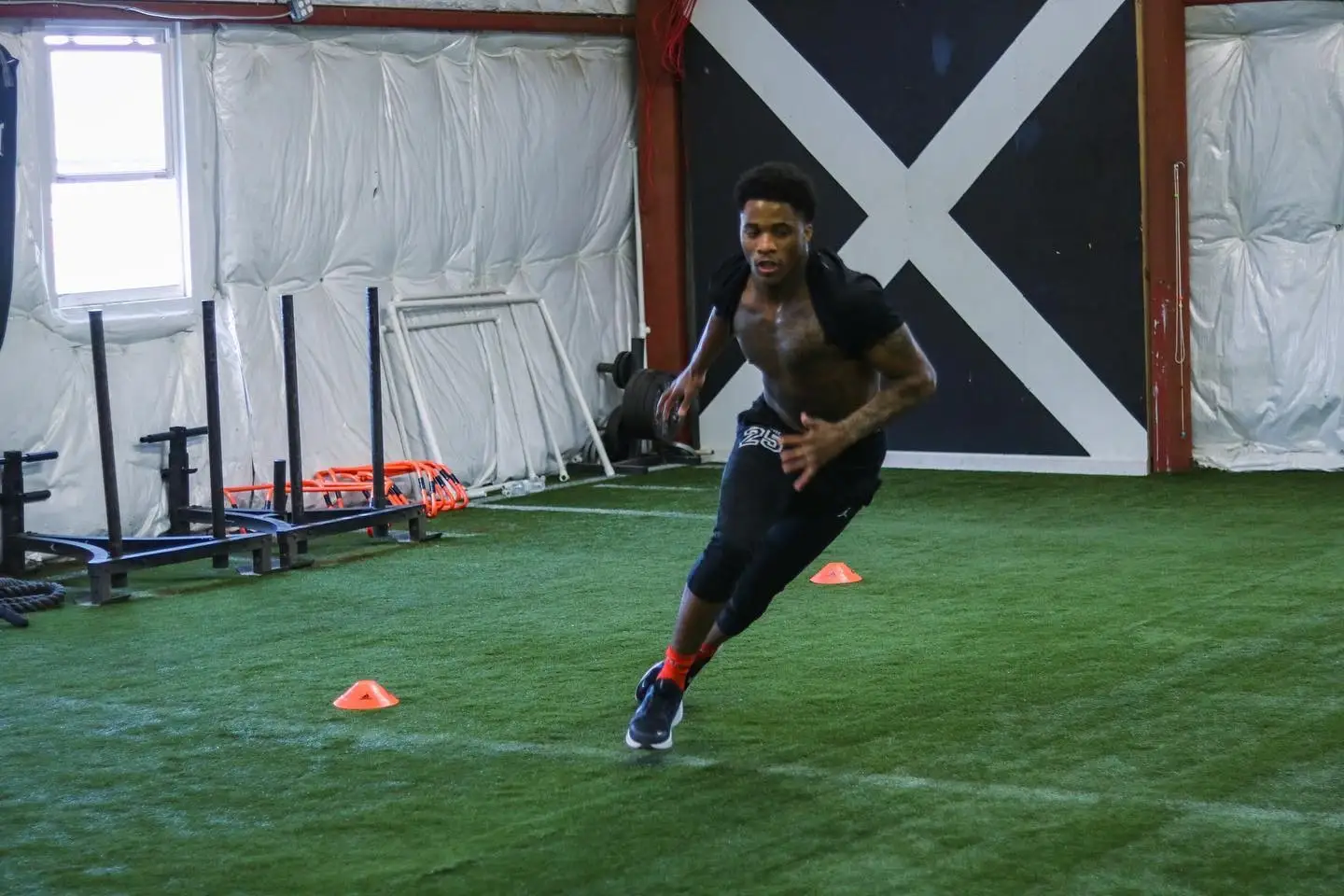
This is the first barrier we address with every athlete who walks through our doors. Before we make you faster, we make sure your body knows how to move efficiently. This means mobility work to eliminate movement restrictions. Stability work to create a solid foundation. Technical coaching to teach proper mechanics. And pattern work to ingrain those mechanics until they're automatic.
You'd be shocked how much "speed" we can unlock just by teaching an athlete to run properly. We're not making them more athletic. We're making them more efficient. And efficiency looks like speed.
Barrier 2: Insufficient Strength Foundation
Speed without strength is like trying to drive a car with a tiny engine. You can press the gas pedal all you want, but there's not enough power to go fast. Most young athletes have never built legitimate strength through progressive resistance training. They have some baseline fitness from playing their sport, but they lack the raw force production capacity that creates explosive speed and power.
This is why our speed development training programs integrate heavy strength work alongside sprint training. You can't separate them. Your ability to accelerate is directly tied to how much force you can produce through the ground. If you're weak, you're slow. Period. It doesn't matter how perfect your mechanics are or how hard you try. Without the strength to generate force, you won't be fast.
We build this foundation through Olympic lifts, heavy squats and deadlifts, explosive jumps, and resistance work that teaches the body to produce maximum force in minimum time. This isn't bodybuilding. Every exercise is specifically chosen to improve athletic performance. And the results are dramatic. Athletes who've been told their entire lives they're "not fast" suddenly start running times that shock their coaches. Not because they got more talented. Because they finally got strong enough to express the speed that was always there.
Barrier 3: Underdeveloped Reactive Ability
Here's something most athletes and coaches completely miss: being fast in a straight line isn't the same as being athletic in competition. Sports don't happen in straight lines. They happen in chaos. You need to accelerate, decelerate, change direction, react to opponents, and adjust your movement in real time. If you can't do that, it doesn't matter how fast you are in a 40-yard dash. You won't be effective in your sport.
This is where agility training programs and reactive speed work become critical. We don't just teach athletes to move fast. We teach them to move explosively in multiple directions, to decelerate under control, to change direction without losing speed, and to react to visual cues the way they'll need to in competition. This is what separates athletes who test well from athletes who play well.
The speed agility training program we use at Spade Athletics is specifically designed to bridge this gap. We combine linear speed work with multi-directional movements, reactive drills, and sport-specific patterns that translate directly to game performance. Athletes don't just get faster. They get more athletic in the ways that actually matter for their sport.
Let me tell you about a few athletes we've worked with who went from overlooked to unstoppable by addressing the barriers that were holding them back.
The linebacker who went from too slow to all-conference: He came to us as a high school freshman who'd been told he didn't have the speed for varsity football. We evaluated his movement and immediately identified the problem: terrible running mechanics combined with almost no foundational strength. We spent his entire freshman year rebuilding his sprint technique and building his strength foundation through heavy lifting and explosive training. By his sophomore year, his 40 time had dropped by half a second. By his junior year, he was starting varsity and earning all-conference honors. His genetics didn't change. His training did.
The soccer player who couldn't get off the bench: She'd been playing club soccer for years but could never crack the starting lineup because her coaches said she was too slow. The problem wasn't speed. It was reactive ability and change of direction efficiency. We focused her training on multi-directional speed work, deceleration control, and explosive changes of direction. Within four months, she was noticeably faster in games, not because her straight-line speed improved dramatically, but because she could now accelerate and change direction more efficiently than her teammates. She went from the bench to starting center mid in one season.
The basketball player who "didn't have hops": He came in as a sophomore who'd been told his whole life he wasn't a good jumper. One assessment told us everything: his vertical jump wasn't limited by genetics. It was limited by weak glutes, tight hips, and zero understanding of how to load and explode properly. We spent six months building his posterior chain strength, improving his hip mobility, and teaching proper jumping mechanics. His vertical increased by six inches. He didn't suddenly become more talented. He finally learned how to access the power he already had.
These aren't miracle stories. They're the predictable outcome of identifying what's holding an athlete back and systematically addressing it through intelligent training. Every athlete has barriers. Most athletes never have anyone identify those barriers and build a program to overcome them. That's what we do.
Here's the fundamental problem with cookie-cutter training programs: they assume every athlete needs the same thing. They put everyone through the same drills, the same lifts, the same conditioning, and hope that something sticks. Some athletes get better. Most plateau. The ones with natural talent progress despite the program. The ones who need actual coaching get left behind.
This is why we refuse to run generic group sessions at Spade Athletics where athletes are just numbers filling slots. Every athlete who trains with us goes through a comprehensive assessment where we identify their specific movement limitations, strength deficiencies, and technical issues. Then we build their program around addressing those specific barriers.
One athlete might need six months of foundational strength work before they're ready for explosive training. Another athlete might have great strength but terrible mechanics that are limiting their speed. Another athlete might be strong and fast in straight lines but can't change direction efficiently. Same age. Same sport. Completely different training needs. If you put them all through the same program, you're leaving potential on the table.
This individualized approach is why we've sent over 100 athletes to college sports. It's not because we work with the most talented kids. It's because we identify what each athlete needs and give them exactly that. We don't guess. We assess, we program, and we execute.
Most athletes never reach their potential not because they lack ability, but because they never get the coaching, programming, and training environment that allows them to access it. They get told they're too slow, too small, not athletic enough, and they believe it. Then they spend years in generic programs that don't address what's actually holding them back.
At Spade Athletics, we see things differently. We see potential in athletes that other facilities overlook. We see barriers that can be systematically removed through intelligent training. We see kids who've been counted out their entire lives suddenly becoming the athletes everyone wishes they'd recruited earlier.
Your potential is there. The question is whether you're willing to put in the work to unlock it.
Explore additional training strategies and performance techniques

Take the first step towards unlocking your full athletic potential with a FREE performance assessment.